OUT NOW • Wealth Inequality • Gender Effects • Racial Capitalism • Join on Substack •

01 WEALTH
THEMES
WEALTH
Families at opposite ends of the wealth spectrum have vastly different economic positions and outlooks. They are governed by two completely different sets of law. Nevertheless, the financial fates of families and individuals at either end of the wealth spectrum are linked. The systems of debt governance and wealth management, each operating in its own domain, represent one complex but unified structure that extracts from some families to enrich others, generation after generation.
02 GENDER
GENDER
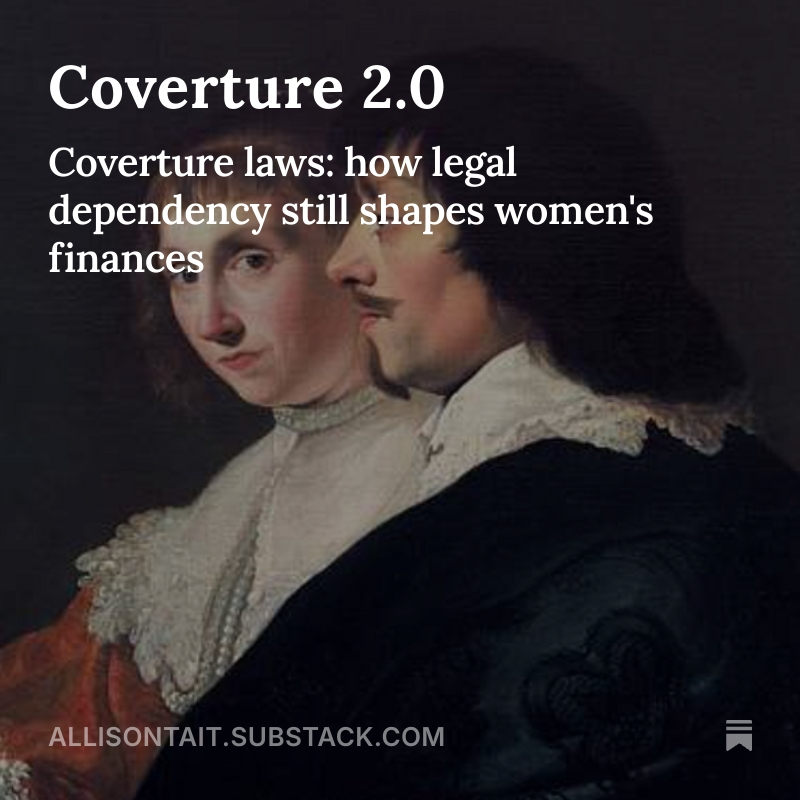
Gendered legal structures are embedded in credit markets, property regimes, and inheritance law, both producing and reflecting economic inequality. From coverture to credit scoring, the law has consistently treated women's economic lives as secondary, shaping who can borrow, what can be owned, and what gets passed down. This book reveals how domestic ordering has produced inequitable financial outcomes.
03 RACE
RACE
Racial capitalism has historically been a fundamental part of the law, from the legal formations of enslavement and land capture to the contemporary institutions of carceral debt and predatory lending. This book uncovers the deeply extractive legal frameworks that embed racial inequality into financial practices and patterns, tracing their deep roots and their present-day consequences.
04 GEOGRAPHIES
GEOGRAPHIES
Wealth and poverty are not evenly distributed across the landscape. Instead, wealth and poverty exist in tightly clustered localities, with securitized borders. Law creates landscape and landscapes reflect back the values that lurk just under the surface of law. From offshore trust havens in Wyoming and Delaware to payday lending corridors in low-income zip codes, the geography of inequality is legal geography.
05 NARRATIVES
NARRATIVES
The stories we tell about credit, responsibility, and government assistance are not neutral descriptions of economic life. They are the building blocks of ideological infrastructure. This book examines how dominant narratives about the democratization of credit and individual responsibility obscure the legal architecture of extraction and discipline those who would challenge it.
The American legal system not only tolerates wealth inequality, it actively engineers it. The legal framework of family money extracts money upward from indebted low-income families to dynastic high-wealth ones through a coordinated architecture of law, geography, and narrative. The House That Family Money Built exposes how poverty governance and wealth management - the legal systems governing credit and debt - are built to entrap poor families while simultaneously supercharging the wealth of the rich.
WEALTH INEQUALITY • GENDER • POVERTY • RACE • GEOGRAPHIES • NARRATIVES •

The Book's Architect
Allison Tait is the Dennis I. Belcher Professor of Law at the University of Richmond School of Law, where she teaches trusts and estates, family law, and feminist legal theory. She holds a J.D. and Ph.D. from Yale University, and she has held fellowships at Yale, Oxford, and Columbia Law School. Professor Tait's scholarship spans trusts and estates, family property, and the political economy of inequality, and has appeared in the Northwestern University Law Review, the Minnesota Law Review, and the Alabama Law Review, among others. Her work has been cited in Bloomberg and the Washington Post.
She lives in Richmond, Virginia, with her two cats, Bertram and Arthur (their publicity materials available upon request). She's a fan of baking shows and Bravo, and willing to entertain any questions on those topics as well.



Early Praise
Allison Tait masterfully juxtaposes the lives and culture of impoverished households and dynastically wealthy families and their differences as well as unexpected similarities. Using the house as metaphor, Tait illuminates the complex narratives that households at each end of the economic spectrum deploy about wealth, credit, debt, financial need, and personal responsibility – while offering a plan to renovate the house to build a more equitable future for all.
Chuck Collins, Institute for Policy Studies, author of Burned by Billionaires and Born on Third Base
In this brilliant and learned book, Allison Tait offers a stunningly original perspective on the coproduction of extreme family wealth and poverty. This book places the legal regulation of family money at the very centre of the debate on wealth inequality and foregrounds the role of law in perpetuating that inequality.
Melinda Cooper, author of Counterrevolution: Extravagance and Austerity in Public Finance
A generous, capacious, and quietly radical book that rearranges the furniture in your head. Tait refuses the wall that keeps wealth management and consumer debt in separate rooms, showing they are two faces of one legally engineered system of extraction. Read it for the argument, and stay for the prose.
Bridget Crawford, University Distinguished Professor, Pace University, and co-editor of Social Movements and the Law: Talking About Black Lives Matter and #MeToo
Tait writes with a rare blend of doctrinal precision and narrative verve. Her tale of two Americas, one of family poverty, the other of family wealth, but both shaped by a law of extraction, is both rigorous and imaginative. This book promises to reshape how the legal academy thinks about family, inequality, and law in the United States.
Andrew Hammond, Professor of Law & Ralph F. Fuchs Faculty Fellow, Indiana University Maurer School of Law